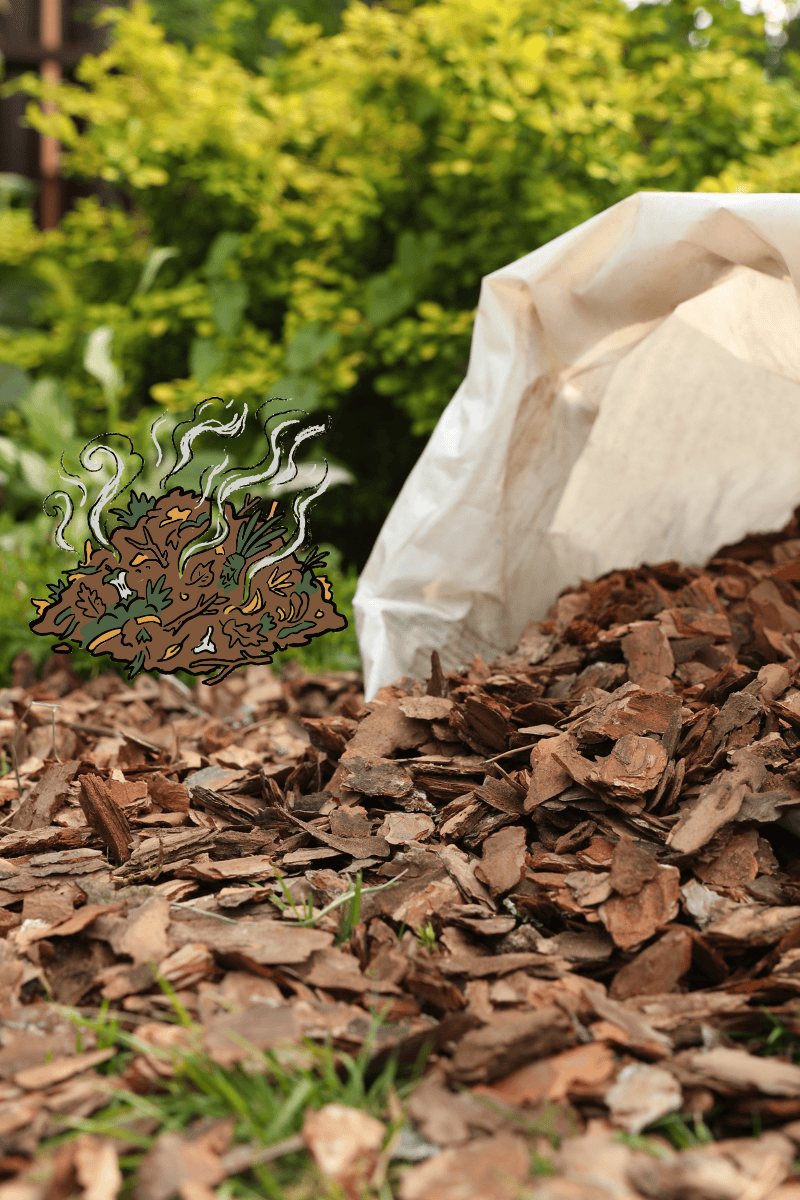
Fall cleanup is almost here. You walk out to your flower beds, look down at last year’s mulch, and a familiar question pops into your head:
What on earth am I supposed to do with this old mulch? Should I scoop it all out, haul it away, and buy a completely fresh load?
It’s a tempting thought. A bed of crisp, dark, brand-new mulch looks so clean and satisfying. But before you grab the rake and waste a ton of physical labor (and money!), let’s set the record straight.
No! Don’t throw it out!
Why Old Mulch is Pure Gold for Your Garden
That weathered, faded mulch from last year isn’t trash—it’s a hidden asset. Over the months, nature has been quietly working its magic.
Old mulch naturally breaks down and turns into rich, nutrient-dense compost. And as a gardener, you already know the holy grail status of compost. It is the ultimate multitasker:
- Suppresses weeds: It blocks light so weed seeds struggle to sprout.
- Fights plant stress: It helps regulate soil temperature through shifting weather.
- Nourishes the earth: As it decomposes, it feeds the soil microbiome and delivers slow-release organic matter straight to your plants’ root zones.
Tossing out old mulch means throwing away free, high-quality organic matter that your garden is literally begging for.
What You Should Do Instead
Don’t haul it away—put it to work! The secret to keeping your beds looking pristine while reaping the benefits of your old mulch is simple: Just top dress it.
- Leave the old layer right where it is. It’s already doing the heavy lifting of protecting your soil.
- Louff or mix it up. Give the top inch or two a gentle rake to blend the weathered material with any lingering debris and aerate the surface.
- Add a fresh layer on top. Spread a thin, fresh layer of new mulch right over the old stuff (aim for a total depth of about 2 to 3 inches—don’t pile it on too thick!).
When you mix the fresh with the old, you get the best of both worlds: the polished, uniform look of fresh mulch on top, and the rich, broken-down compost doing wonders underneath.
The One Exception to the Rule
Of course, there is always an exception. You should only remove or discard old mulch if:
- Disease is present: If plants in that specific bed suffered from a severe fungal disease, blight, or pest infestation last season, it’s safer to clear it out to prevent reinfection.
- It’s matted and suffocating: If the mulch has formed a thick, impenetrable, water-resistant mat (common with cheap shredded wood chips that weren’t turned), break it up or remove it so water and air can actually reach your soil.
Otherwise? Leave it be, add your fresh layer, and let your garden thrive.
WATCH THIS ACCOMPANYING VIDEO: https://youtu.be/1SjBbwlzpw4




Leave a Reply