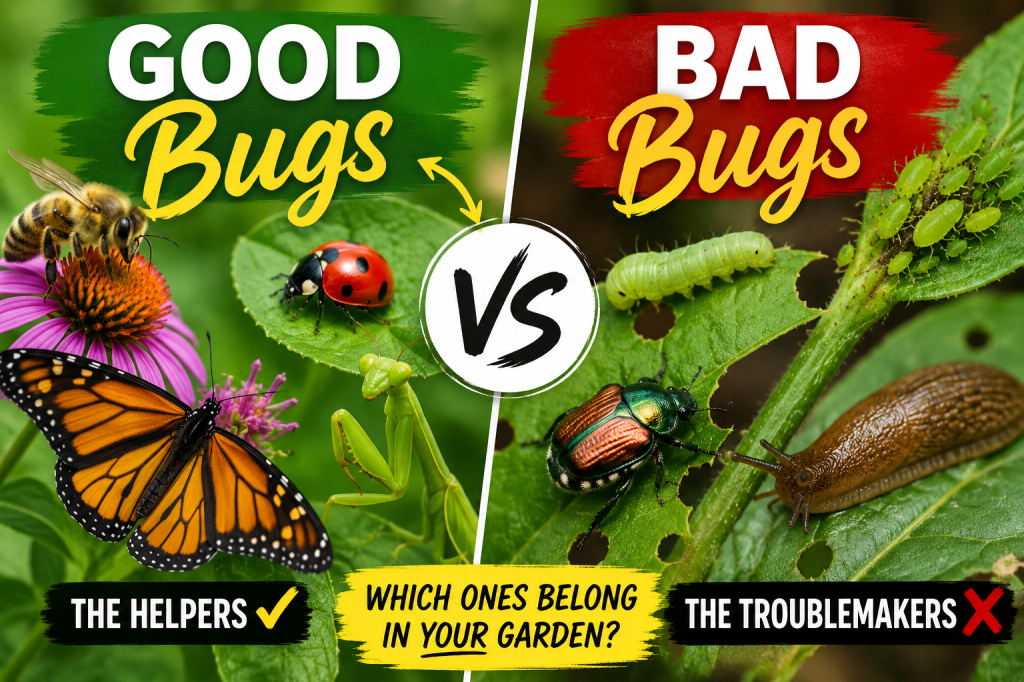
One of the biggest mistakes new gardeners make is assuming every insect they see is harmful. But a healthy garden is full of life. The trick is learning which visitors are helping and which ones are causing trouble.
Let’s walk you through some of the most common beneficial insects, some common pests, and how I think about balancing nature in the garden.
A Healthy Garden Has Bugs
I know that may sound strange…but a garden with absolutely no insects usually isn’t a healthy ecosystem.
Very necessary are:
- Pollinators
- Natural predators
- Soil life
The goal isn’t a bug-free garden. Instead the goal is a balanced garden.
That’s an important concept.
GOOD BUG #1 — LADYBUGS
Benefits:
- Eat aphids
- Eat soft-bodied pests
- Natural pest control
Ladybugs are probably the most famous beneficial insect in the garden. One ladybug can consume dozens of aphids daily!
GOOD BUG #2 — BEES
For:
- Pollination
- Fruits
- Vegetables
- Flowers
When people think about gardening, they often focus on plants.
But without pollinators, many of those plants wouldn’t produce what we’re hoping for.
GOOD BUG #3 — BUTTERFLIES
Benefits:
- Pollination
- Biodiversity
They add beauty to the garden and help support a healthy ecosystem.
GOOD BUG #4 — SPIDERS
I know…some of you just got uncomfortable.
You see, they:
- Eat pests and are
- Natural predators
Most spiders are helping far more than they’re hurting.
GOOD BUG #5 — PRAYING MANTIS
Benefits:
- Predatory insect
- Eats many garden pests
They’re like tiny garden security guards.
BAD BUGS!
Now let’s talk about the insects that can create problems.
BAD BUG #1 — APHIDS
Signs:
- Curled leaves
- Sticky residue
- Clusters
BAD BUG #2 — CATERPILLARS
Not every caterpillar is a villain. Besides, they become beautiful butterflies!
BAD BUG #3 — SPIDER MITES
Signs:
- Webbing
- Speckled leaves
- Stress
BAD BUG #4 — SLUGS & SNAILS
Signs:
- Large holes
- Night feeding
- Slime
BAD BUG #5 — JAPANESE BEETLES
They are especially relevant in the State of Georgia.
Signs:
- Skeletonized leaves
- Heavy feeding
If you’ve ever walked outside and wondered what happened overnight… Japanese beetles may have been involved.
How To Encourage Good Bugs
Plant diverse flowers such as these:
- Yarrow
- Coneflowers
- Bee Balm
- Dill
- Fennel
- Marigolds
Before You Spray
One thing I’ve learned over the years is not to react too quickly.
Things you should do:
- Identify first
- Observe
- Understand the problem
Sometimes the solution is already living in your garden!
Gardening Is About Balance
A thriving garden isn’t about controlling every single thing that happens. It’s about learning to work with nature instead of fighting it.
I’ve learned that some of my best garden helpers have six legs!
What’s the most helpful insect you’ve seen in your garden?
And what’s the pest that gives you the most trouble?
Let me know in the comments.
Watch this accompanying video: https://youtu.be/nUpSn-LOTpw



Leave a Reply